Traveling with a newborn:
how young can a baby fly?
Younger than most parents expect: the FAA sets no minimum age, and most US airlines take babies from a few days to two weeks old. The harder questions are whether to buy the seat and how to get a car seat through the airport. We bought the seat for both our girls, every time, and the routine below is the one we used.
Flying with a newborn, at a glance.
| Question | Short answer |
|---|---|
| Minimum age to fly | Set by each airline, not the FAA. Usually a few days to two weeks old. |
| When pediatricians often suggest | About two to three months, after the first vaccines. Ask yours. |
| Lap infant or own seat | Lap is allowed under age two. We always bought the seat. |
| Car seat on board | Yes, with its own seat and the aircraft label. Usually a window seat. |
| Formula and breast milk | Allowed above 3.4 ounces in carry-on. Tell the TSA officer. |
| Paperwork | A passport for any international flight. A birth certificate can help for a domestic lap infant. |
How young can a newborn fly?
There is no federal minimum. Each airline writes its own rule, and on most US airlines it lands somewhere between a couple of days and two weeks old, with some asking for a doctor's note before the baby is a week old. Check your airline's infant page before you book, because the number differs from one carrier to the next.
What an airline allows and what is a good idea are two different questions. The common advice from pediatricians is to wait until a baby is about two or three months old, after the first round of vaccines, mostly because airports and planes are full of other people's germs. Babies born early, or with heart or breathing concerns, are a conversation for your pediatrician before anything gets booked.
Flying with newborns: lap infant or their own seat?
A baby under two can fly on your lap. On US domestic flights that is free, and on international flights a lap infant usually pays a percentage of the adult fare plus taxes. The FAA's own recommendation is a purchased seat with an approved car seat, and that is the call we made for our girls every single time.
It is a real added cost, and we would still make the trade. Buying the seat let us bring the car seat on board and buckle the baby into something familiar and secure, rather than holding her for six or seven hours. It was best on long-haul flights, and especially on red-eyes, which already line up with a baby's bedtime.
Flying lap infant internationally? Many long-haul flights have a few bulkhead bassinets for small babies. They are limited, the weight and length limits vary by airline, and they go to whoever asks first, so request one when you book.
How to travel with a newborn:
stroller to the gate, car seat onto the plane.
We drive the stroller all the way to the gate. That keeps our hands free through security and the terminal. Right before boarding we gate-check the stroller and carry the car seat on with us to buckle into the seat we bought.
Check the car seat for the label that says it is certified for use in motor vehicles and aircraft before you leave home. It almost always has to go in a window seat so it doesn't block anyone's way out, so book the window when you book the baby's seat.
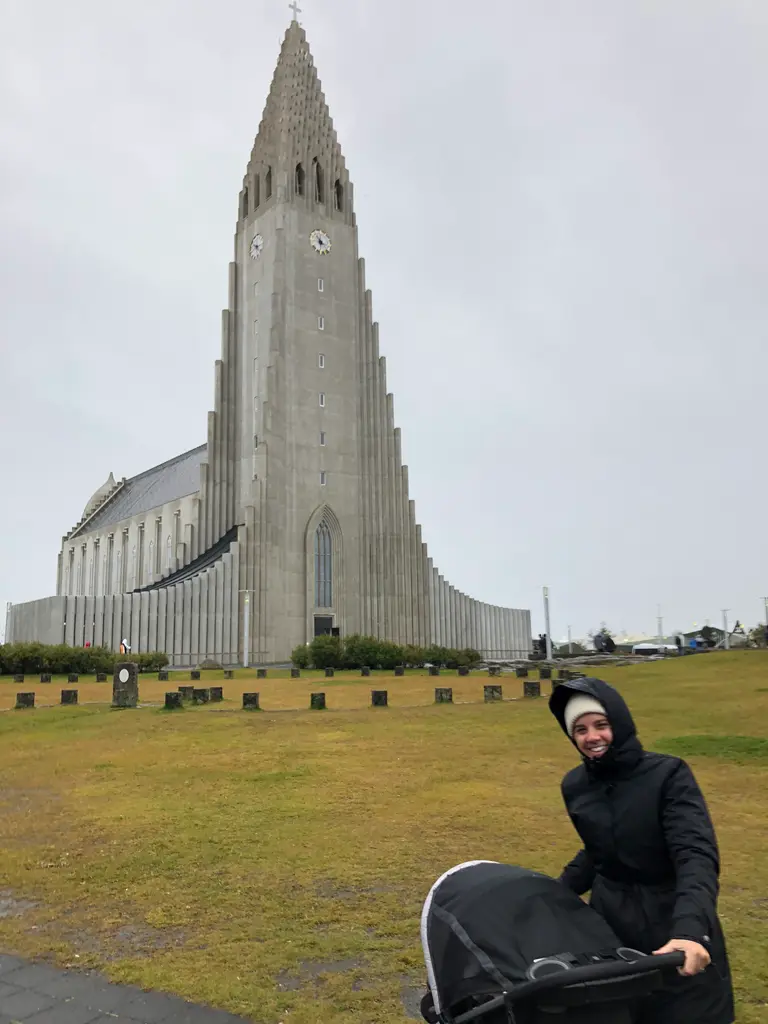
The rest of the plane gear: the carriers, the Pockit stroller that folds into the overhead bin, and the FlyPal we used once she outgrew the car seat are all in our Airplane Essentials list (affiliate link). As an Amazon Associate, Nowhere On Earth earns from qualifying purchases.
What to sort out before a newborn's first flight.
Feeding through security
TSA allows formula, breast milk and baby food above the 3.4 ounce liquid limit in reasonable quantities. Pull them out of the bag and tell the officer at the start of screening. They get screened separately, so build a few extra minutes into the airport time.
Ears on takeoff and landing
The standard advice is to feed or offer a pacifier as the plane climbs and descends, since swallowing helps a baby's ears adjust to the pressure change. Saving a feed for the descent is easier than it sounds if you watch the flight map.
Paperwork
Any international flight means a passport, newborns included, and a baby's first passport usually needs both parents at the appointment. Our baby and child passport guide covers what ours took. For a domestic lap infant there is no ID requirement, but carry a copy of the birth certificate in case the airline asks you to prove the baby is under two.
The newborn stage is the easy window.
A baby who sleeps most of the day is, in a lot of ways, the easiest flyer you will have. The hard window is about six months to two years, when they are too old to sleep the whole way and too young to be bribed with a movie.
That is the age we flew our oldest to Iceland. She slept in her car seat for about half the overnight flight and spent the other half wanting to crawl. Our car seat on a plane guide has that whole flight, and why Iceland is the short transatlantic hop we suggest for a first long-haul trip with a baby. If you are flying out of Logan, flying Logan with kids covers Terminal E and where to wait with a stroller.
What families ask us.
How young can a newborn fly?
The FAA sets no minimum age. Each airline sets its own, and most US airlines accept babies from a few days to two weeks old, sometimes with a doctor's note for the first week. Common pediatric advice is to wait until about two or three months, after the first vaccines, so ask your pediatrician before you book.
Do newborns need their own seat on a plane?
No. Babies under two can fly on a parent's lap, free on US domestic flights and usually for a percentage of the adult fare plus taxes on international ones. The FAA recommends a purchased seat with an approved car seat, and that is what we always did with our girls.
Can you bring a newborn car seat on a plane?
Yes, if the baby has their own seat and the car seat carries the label saying it is certified for use in motor vehicles and aircraft. Most infant car seats that click into a base have it. It usually goes in a window seat. Foreign airlines set their own rules, so check before you fly.
How do you get through the airport with a newborn?
Our routine: drive the stroller all the way to the gate, gate-check the stroller right before boarding, and carry the car seat on to buckle the baby into the seat we bought. It keeps your hands free through security and the terminal.
Can you bring formula and breast milk through airport security?
Yes. TSA allows formula, breast milk and baby food in reasonable quantities above the usual 3.4 ounce liquid limit in your carry-on. Take them out and tell the officer at the start of screening, and expect them to be screened separately.
Does a newborn need a passport to fly internationally?
Yes. Every US traveler needs a passport for international flights, newborns included, and both parents usually have to appear for a child's first one. For a domestic flight a lap infant needs no ID, but airlines may ask for a birth certificate to prove the baby is under two.
Where this fits.
Our overnight flight to Reykjavik with a nine-month-old.
The both-parents rule and what our appointment really took.
What actually goes in the bag for the youngest kids.
The flight guide from Boston.
Which routes run year-round, which are summer only, how far ahead to buy for a school vacation week, and the order we book a trip in.
Plus our 12-page field guide, free: where we stay, what we pack, and the eSIM, VPN and insurance we set up before every trip.
Or have us plan it with you: a $99 consultation, or full booking from $499.